Skip to content
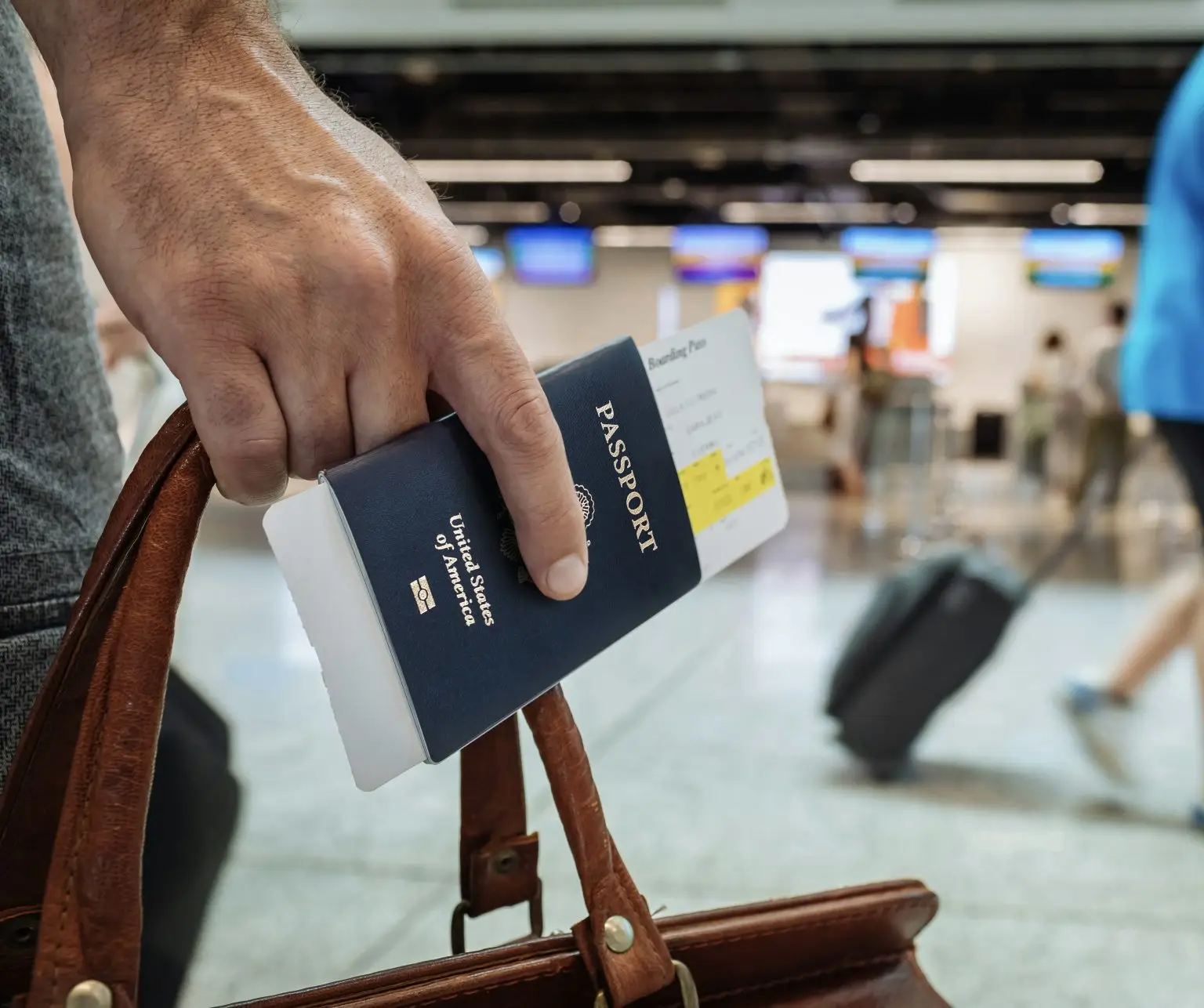
What every American, Briton, Canadian, and Australian needs to know before flying to Europe in 2027.

By Mads Nordsveen24 min read
Do I need ETIAS for my Europe trip? It depends on three things: when you’re flying, where you’re flying, and which passport you’re holding when you board.
A plain-English guide for US, UK, Canadian, Australian, Japanese, and other visa-exempt travelers, covering what’s confirmed, what isn’t, and the edge cases nobody else is writing about.
Last updated: 9 October 2026
ETIAS is one of those bureaucratic abbreviations that’s been in the air long enough for most travelers to stop paying attention. The European Travel Information and Authorisation System has slipped from its original 2021 launch every single year. In April 2026 the European Commission still said the last quarter of 2026. That target was taken off the official ETIAS site in July, and as of 9 October 2026 the site gives no start date and is not accepting applications.
Whether and when it affects any given trip comes down to three things: when you’re flying, where you’re flying, and which passport you’re holding when you board.
The shortest version: you do not need ETIAS today. The portal isn’t open. The system isn’t accepting applications. When it does open, travelers from the US, UK, Canada, Australia, New Zealand, Japan, and around 55 other visa-exempt countries will need to apply online before flying.
The application takes about ten minutes, costs €20, and stays valid three years. EU and EEA citizens, Norwegians included, are exempt forever and don’t need to do anything.
What this guide covers is everything in between, especially the parts that get reported badly: the difference between ETIAS and the EES biometric border that’s already running, the geographic edge cases that catch travelers out (Cyprus, Ireland, Svalbard, the microstates), what airport transit requires, and the scam websites that have been multiplying since 2024.
Who this guide is for, and who can ignore it
A useful filter before going further. This guide is written for visa-exempt non-EU travelers: US passport holders, UK passport holders, Canadians, Australians, New Zealanders, Japanese, South Koreans, and citizens of around fifty other countries on the EU’s Annex II list. If you hold an EU or EEA passport, including a Norwegian one, ETIAS doesn’t apply to you and never will. The Norwegian Police state this directly: EU and EEA nationals enter the Schengen Area on their existing passport or national ID with nothing else required.
Same applies if you already hold a Schengen visa, a long-stay national visa (Type D), or an EU-issued residence permit. You’re covered by the document you’ve got. ETIAS is the new piece of paperwork being built for the rest of us.
ETIAS vs EES, the two systems everyone keeps blurring
Two systems, two timelines, two purposes. Travel coverage keeps mixing them up and travelers keep absorbing the confusion.
EES is the biometric border that’s already operating. The European Commission ran a phased rollout from 12 October 2025 and reached full operation across all Schengen external borders on 10 April 2026. Nothing to apply for, no fee, nothing to do in advance. When you arrive at a Schengen border now, the kiosk scans your face and fingerprints, records the entry, and stores an electronic equivalent of what used to be ink in your passport.
Same process on the way out. The data sits there for three years and helps the system flag overstays, identity mismatches, and fraud.
Checks still vary from airport to airport. In September 2026 nine countries, including France, Germany, Italy and Greece, told Brussels they needed more time to take fingerprints and photos at every crossing point. Big hubs such as Frankfurt and Schiphol run the full process, but some smaller airports and ports may still skip the biometric step.
ETIAS is the pre-travel authorization that doesn’t exist yet. In July 2026 the EU dropped its target of a start in the last quarter of 2026, and no new date has been set. When it does open, visa-exempt travelers will need to apply online before any Europe-bound flight, pay €20, and get authorization valid for three years. Each authorization is linked to the specific passport details on the application, so renewing your passport invalidates the existing ETIAS.
The two systems work in sequence. You’d apply for ETIAS at home before booking. Your airline would verify the authorization against your passport at check-in. EES would do the biometric capture when you crossed the border.
Same trip, two separate technologies, two separate moments.
The blur happens because both rolled out close together and both involve fingerprints somewhere in the process. If a friend mentions getting their fingerprints taken at a German airport in summer 2026, they’re describing EES, not ETIAS. ETIAS isn’t operational yet.
One geographic wrinkle worth flagging now: EES applies to 29 Schengen countries. ETIAS applies to those same 29 plus Cyprus. That mismatch has consequences later if Cyprus is on your itinerary.
The timeline, and what’s confirmed inside it
In April 2026 the European Commission said ETIAS was scheduled to start in the last quarter of 2026. In July that line disappeared from the official ETIAS site, which now says only that ETIAS is not in operation and that the start date will be announced several months before launch. As of 13 October 2026 no date has been announced, and ABTA says Frontex has confirmed that ETIAS will not launch in 2026.
Most reporting points to 2027. Poland’s foreign ministry wrote on 27 September 2026 that the launch is planned for 2027, and the Commission says it will set a date once all conditions are in place. Until it does, treat 2027 as an estimate.
Two soft phases follow the launch. The first is a transitional period of at least six months. Travelers are encouraged to apply during that window but won’t be denied entry purely for not having ETIAS, provided they meet the other entry conditions. After that comes a grace period of at least another six months.
Only first-time travelers since the end of the transitional period can still enter without ETIAS during the grace window.
If both phases run their minimum six months, full enforcement starts about a year after launch. That’s a ‘could,’ not a ‘will.’ The Commission can extend either phase, and this rollout has slipped before.
The practical takeaway: ETIAS panic for trips you are taking now is misplaced. Anyone flying while the official portal is still closed does not need it and cannot apply. Watch travel-europe.europa.eu/etias for the confirmed date. Once it opens, apply early. First-timers planning a Europe trip after clearing entry rules may also want our list of solo travel destinations for first-timers.
The transitional and grace phases give some leeway after launch, but full enforcement follows those phases.
Do you need ETIAS for your trip? Sorted by travel date
The single fastest reference for figuring out where you stand:
| Travel dates | What you need |
|---|---|
| Until the official portal opens | Nothing. No ETIAS applications are being collected. |
| In the months after the EU publishes a start date | Apply once the portal opens. Transitional period gives leeway, but apply anyway. |
| During the transitional period after launch (at least six months) | Apply for ETIAS. You are encouraged to hold one even while entry without it is still allowed. |
| After the grace period ends (at least six more months) | ETIAS likely mandatory. Without it, airlines won’t let you board. |
Apply as soon as the portal opens, regardless of when you’re flying. ETIAS is good for three years and covers unlimited trips during that window, so there’s no benefit to waiting and a real risk if your application gets flagged for the slower review.
Which passports trigger ETIAS
Whether ETIAS applies to you comes down to which passport you’ll hand over at check-in: the specific document you travel on, whatever other citizenships you hold.
If the only passport you hold is from a visa-exempt country (the US, UK, Canada, Australia, New Zealand, Japan, South Korea, or one of the fifty-plus others on the EU’s Annex II list), you’ll need ETIAS once it launches. That’s the population the system is built for.
EU passport holders are exempt. Travel on an EU passport from any of the 27 member states and ETIAS never enters the picture. The same applies to Norwegian, Icelandic, and Liechtenstein passports (the EEA non-EU members) and Swiss passports (Switzerland is a Schengen country despite being outside the EU).
Dual citizens are where it gets interesting. The rule that catches people out: ETIAS depends on which passport you present at the airport. A US-Italian dual citizen flying on her Italian passport doesn’t need ETIAS. The same person flying on her US passport does.
Pick one document per trip and stay consistent throughout.
Two non-EU citizenships? Pick whichever passport you’ll travel on, apply for ETIAS with that one, and travel with it. The authorization links to the document you applied with, so it has to match the document you board with.
If you already hold a Schengen visa (Type C) or a long-stay national visa (Type D) issued by a Schengen country, you’re covered. Same for anyone with an EU or Schengen residence permit. Carry the document you’ve already got.
Irish passport holders are explicitly exempt, even though Ireland is in the EU. So are nationals of the four European microstates: Andorra, Monaco, San Marino, and Vatican City.
One quiet hazard: the ETIAS authorization links to the specific passport details on the application. Renewing your passport during the three-year validity window invalidates the existing authorization, so you’d need to reapply with the new one. Worth checking your passport expiry before you apply, especially if there’s less than three years on it.
The 30 ETIAS countries
Thirty countries are in the ETIAS net once it launches. The full Schengen Area accounts for 29 of them: Austria, Belgium, Bulgaria, Croatia, the Czech Republic, Denmark, Estonia, Finland, France, Germany, Greece, Hungary, Iceland, Italy, Latvia, Liechtenstein, Lithuania, Luxembourg, Malta, the Netherlands, Norway, Poland, Portugal, Romania, Slovakia, Slovenia, Spain, Sweden, and Switzerland. Cyprus makes the thirtieth. It isn’t in Schengen but it’s still in ETIAS, which we’ll come back to.
Bulgaria and Romania are recent additions to Schengen. Air and sea borders opened in March 2024, full land border integration completed on 1 January 2025. Time spent there counts toward the 90-day Schengen limit now, even though it didn’t a couple of years ago. Keep this in mind if you’ve used those countries as a buffer in older trip planning.
A single ETIAS authorization covers all thirty countries. There’s no per-country application. Once you’ve cleared external border control on arrival, internal Schengen borders generally have no checks, so you can move between France, Germany, Italy, and the rest without showing your authorization again.
Four geographic traps: Cyprus, Ireland, Svalbard, microstates
European entry rules have four geographic edge cases that catch people out. Each is worth understanding before you book, because each breaks the simple Schengen-or-not logic that most coverage relies on.
Cyprus: in ETIAS, not in Schengen
Cyprus is the awkward one on the ETIAS list. It’s an EU member but hasn’t joined Schengen yet, partly because of the unresolved division of the island. President Nikos Christodoulides reaffirmed in February 2026 that Cyprus is pursuing fast-track Schengen accession with French technical support, but no firm date is set.
For now, you need ETIAS to enter Cyprus when the system launches, the country runs its own border control separate from Schengen (so flying Athens to Larnaca involves a passport check), and the time you spend there is counted separately from your Schengen 90-in-180 days. That last part is useful for long itineraries.
Ireland: in EU, not in Schengen, no ETIAS
Ireland is the inverse case. It’s in the EU but opted out of Schengen to maintain the Common Travel Area with the UK. Irish citizens never need ETIAS. Travelers visiting Ireland never need ETIAS for Ireland itself.
This part often gets misreported: Ireland does not reset your Schengen 90-day clock. The 90/180 rule is rolling, calculated by looking back at how many days you’ve been inside Schengen during the previous 180. Time in Ireland doesn’t add to that count, but it doesn’t erase the days you’ve already used either. If you’ve spent 85 days in Spain and then fly to Dublin for two weeks before going on to Portugal, you don’t get a fresh 90 days.
You get five.
This trips up long-term travelers who think Ireland (or the UK, or Albania, Montenegro, Serbia) works as a reset destination. It pauses your clock; it doesn’t restart it.
Svalbard: outside Schengen, but you can’t avoid it
This is the Norway-specific edge case nobody else is covering well, and it matters more than people realize. The Norwegian Arctic archipelago sits outside Schengen entirely. Norwegian Police note that visa-exempt travelers don’t need ETIAS for Svalbard itself.
The catch is access. There are no direct international flights to Longyearbyen. Anyone flying in routes through mainland Norway, almost always Oslo or Tromsø, and that part of the trip is Schengen. So a US photographer planning a polar-night week needs ETIAS for the Norwegian leg both ways, even if she’s only stopping in Oslo for a few hours each direction.
Svalbard itself is exempt; the way in is not. If you’re heading north for the dark season, plan for ETIAS.
The microstates: technically exempt, practically not
Andorra, Monaco, San Marino, and Vatican City sit outside ETIAS and Schengen formally. They also have no international airports and no independent border controls. Reaching Andorra means crossing France or Spain. Reaching Monaco means crossing France.
Reaching San Marino or Vatican City means crossing Italy. All of those approach countries are ETIAS countries, so the microstates are technically exempt and practically not. A weekend in Vatican City requires ETIAS for the Italy leg, even though Vatican City itself is outside the system.
What counts at airport transits
The gap between what travelers expect and what the rules say is widest at airport transits. Whether you need ETIAS depends entirely on whether you cross a Schengen passport-control line.
Airside transit, where you stay in the international zone and never leave the secure area, generally doesn’t trigger ETIAS. Your bag gets checked through, you connect at the gate, you board your next flight without ever entering Schengen formally. New York to Frankfurt to London via airside doesn’t need ETIAS for the German leg. Neither does Tokyo to Paris to Boston, if you’re staying airside the whole time.
The moment you have to clear passport control, the rule flips. Changing terminals at most major Schengen airports requires border control even if you’re connecting. Self-transferring between separate ticketed flights, where you have to collect and re-check your bag, always requires border control. Both of those need ETIAS regardless of where you’re ultimately landing.
The case people get most wrong is connecting through a Schengen airport to another Schengen destination. New York to Frankfurt to Rome isn’t a transit through Frankfurt in the legal sense; Frankfurt is your point of entry into Schengen, even though Italy is your final destination. ETIAS required. New York to Frankfurt to London is different: airside the whole way, the Frankfurt leg doesn’t formally enter Schengen, no ETIAS for the German part. (You will need a UK ETA for London, but that’s a separate £20 application.)
Land borders, ferries, cruise ports, and trains follow the same logic. Eurostar London to Paris crosses a Schengen external border at the Channel Tunnel and needs ETIAS. A ferry from Dover to Calais: ETIAS. A cruise calling at Barcelona: ETIAS for the first Schengen port of call.
The simplest test: if your boots cross a passport-control line at a Schengen border, ETIAS. If you stay airside the whole time, usually not.
The 90/180 rule, which ETIAS doesn’t change
How long you can stay in Europe is a separate question from whether you need ETIAS. The 90/180 rule still governs the stay limit, and it isn’t changing.
Maximum 90 days inside the Schengen Area within any rolling 180-day period. The clock runs on a rolling, backward-looking calculation, with no reset on January 1st or on your birthday: pick any day, count back 180 days, and tally how many of those you spent in Schengen. That number can’t exceed 90.
ETIAS doesn’t extend the limit. A three-year ETIAS authorization lets you make multiple trips, but each trip still counts against the 90-day cap in any 180-day window. If you need longer than that, the answer is a national long-stay visa (Type D) from a specific Schengen country, which is a separate application and a separate process entirely.
The EU’s own Schengen calculator at travel-europe.europa.eu helps if you’re juggling multiple trips, especially the rolling math. Days in the UK, Ireland, Albania, Serbia, Montenegro, Turkey, Cyprus, and most of the Western Balkans don’t count toward the limit. Days in any of the 29 Schengen members do.
How the application will work
The application itself, based on what the European Commission has published, is straightforward.
You’ll go to the official portal at travel-europe.europa.eu/etias and fill out an online form. The data points it asks for are passport details, your address, your occupation, your first country of entry into Schengen, and a short series of yes/no security questions. The questions cover criminal history, prior travel to conflict zones in the past 10 years, prior visa or entry refusals, and certain communicable diseases. Standard ESTA-style screening.
Payment is €20 by credit or debit card. (Free for travelers under 18 or over 70.) Most applications process within minutes; a small percentage get flagged for additional review and can take up to 30 days. Once approved, the authorization is linked digitally to your passport. Nothing to print, though saving the confirmation email is sensible in case anything goes wrong at check-in.
What you don’t need: documents to upload, embassy appointments, biometric data captured during the application, or a ‘premium service.’ The EU has confirmed that there are no authorized third-party services. Anyone offering to expedite your ETIAS for an extra fee is adding cost for no benefit.
Apply as soon as the portal opens, even if your trip is months away. ETIAS is good for three years and covers unlimited trips during that window, so the only argument for waiting is laziness, and the only consequence of waiting is risk if your application triggers the slower review path.
What it costs and how long it lasts
The fee is €20, confirmed by the European Commission on 17 July 2025. The increase from the originally proposed €7 reflects inflation since 2018 and the cost of running a screening system across more than sixty visa-exempt countries. Travelers under 18 or over 70 pay nothing but still need an approved authorization.
Validity is three years from approval, or until your linked passport expires, whichever comes first. If your passport has 18 months left when you apply, your ETIAS will be good for 18 months. Same passport, same authorization, same expiry date.
The fee is non-refundable if you’re denied, so it’s worth getting the application right the first time. Mistyping the passport number is the most common avoidable mistake.
The passport itself has to meet a few conditions: biometric (the chip symbol on the cover, which every US passport since 2007 has), issued in the past 10 years, and valid at least three months past your planned date of departure from Europe.
If you renew your passport while your ETIAS is still active, the authorization becomes invalid the moment the new passport is issued. You’d reapply with the new passport, pay €20 again, and start a fresh three-year window. Worth thinking about if your passport has under three years of validity when you apply.
Children, dual citizens, residents
Every traveler needs their own ETIAS, infants included. Under-18s are exempt from the €20 fee but still need an approved authorization linked to their passport. A family of four (two parents, two kids) means four separate applications and €40 in fees.
Non-EU family members of EU citizens exercising free movement rights have a more favorable position. They may need ETIAS, but they’re exempt from the fee, and their applications aren’t subject to the standard immigration screening. Bring documentation proving the family relationship; the border officer will want to see it.
Dual citizens, again: ETIAS depends on the passport you travel on. Use your EU passport at check-in and you’re exempt. Use your non-EU passport and you need ETIAS. Don’t try to mix passports within a single trip.
Residents of EU or Schengen countries don’t need ETIAS for travel within those countries. A US citizen with German residency travels on her residence permit. The complication arises with national-only permits versus EU-wide ones. EU-issued residence cards under Article 2(16) of the relevant regulation cover free movement; some national permits don’t extend the same way.
If you’re unsure, ask the embassy of the country you’re flying into.
Refugees and stateless persons follow different rules depending on which country issued their travel document. If it’s from an EU or Schengen country, no ETIAS. If it’s from a non-EU country, the rules vary by issuer. Worth checking directly with the embassy of your destination.
UK nationals living in the EU under the Withdrawal Agreement (the post-Brexit settlement) are exempt with the proper documentation.
What happens if you’re refused or delayed
Most applications will be approved within minutes. A small percentage trigger additional review, and a smaller percentage get refused outright.
A ‘limited validity’ ETIAS sits between the two. The authorization gets granted but with restrictions on where and when you can travel, usually for humanitarian reasons or important obligations. Rare in practice.
A refusal comes with a written reason and the right to appeal. The most common refusal grounds are previous immigration violations, security flags, or simple data errors like a mistyped passport number. Many refusals can be resolved by reapplying with corrected information.
If a refusal stands after any errors are fixed, the fallback is a Schengen visa application through the consulate of the first country you intend to visit. ETIAS refusal doesn’t bar you from a visa, but it complicates the process and the consulate will want to understand why you were refused.
The practical advice: don’t book non-refundable flights before your ETIAS is approved, especially if anything in your history might trigger review. Past visa refusals from any country, criminal convictions, recent travel to conflict zones, any of those can flag your application for the slower review path.
Scams and fake ETIAS websites
Frontex, the EU agency operating ETIAS, has identified more than a hundred unofficial websites, and in October 2026 ABTA counted more than 150 sites claiming to sell it. Many use legitimate-looking layouts, EU-style branding, and copyrighted EU material. Some buy Google Ads to appear above the official EU page in search results. ABTA, the UK travel trade body, has issued repeated warnings about the same problem since 2024.
The system isn’t accepting applications. Anything offering to process your ETIAS today is fraudulent.
When the official portal does open, only one URL will be legitimate: travel-europe.europa.eu/etias. Everything else, regardless of how official it looks, isn’t.
The patterns to watch for are consistent across the fake sites. They claim to accept applications before the EU has opened the official portal, which they can’t. They charge more than €20, often €50 or €100 or higher, framed as ‘service fees’ or ‘premium processing.’ They use domain names like etias-application.com or apply-etias.eu or official-etias.org, which sound right and aren’t.
They promise guaranteed approval, which the EU never does. They claim spaces are limited or applications need to be made urgently, which is false because ETIAS isn’t capacity-restricted. They show up as Google Ads above the official EU site. They ask for payment by wire transfer, gift card, or cryptocurrency.
They request unnecessary personal data: bank details, full national ID numbers, copies of utility bills.
The risk runs deeper than the inflated fee. These sites collect passport details, contact information, and credit card data, and that’s identity-theft territory. The cost of getting caught is much more than the €60 markup.
If you want help with the application when it goes live, the only safe option is the official EU portal directly. Travel agents can walk you through it; they can’t submit anything different from what you’d submit yourself.
How this looks in real trips
The rules are easier to absorb through specific cases. Seven travelers, seven different situations, all common.
A US traveler heading to Italy for two weeks once the system is running needs ETIAS. She’d apply at the official portal as soon as it opens, pay €20, and get three years of validity covering her trip and any others in that window. EES happens automatically at Rome Fiumicino on arrival; her face and fingerprints get scanned at the kiosk, no separate step.
A UK traveler taking the Eurostar to Paris after ETIAS is live also needs ETIAS. The Channel Tunnel crosses a Schengen external border, so the rule applies the same as flying. During the transitional period there may be some leeway at the border, but the practical advice is to apply anyway once the portal is open.
A Canadian-Italian dual citizen has the cleanest situation: travel on the Italian passport, no ETIAS, no €20, no application. Carry both passports for safety, but enter and exit Schengen on the Italian one. The same trip becomes a different experience entirely depending on which document she hands over at the gate.
An Australian flying New York to London via airside transit at Frankfurt has the case most often gotten wrong. No ETIAS for the Frankfurt leg if she stays in the international zone and her bag is checked through. The German connection doesn’t formally enter Schengen. She does need a UK ETA for London.
Separate system, £20 application, valid two years.
An American photographer heading to Svalbard for two weeks of polar night, in the first winter after launch, needs ETIAS, even though Svalbard itself is outside Schengen. The Oslo connection both ways is what triggers it. €20 covers the trip and three years of any other Europe travel.
A New Zealand traveler planning three months in Spain followed by two weeks in Ireland followed by another three weeks in Portugal has a 90/180 problem layered on top of the ETIAS question. ETIAS yes; she needs the authorization. But the Ireland leg doesn’t reset her Schengen clock. Three months in Spain (90 days) plus three weeks in Portugal (21 days) puts her at 111 days within a 180-day window, which is over the limit.
The trip needs restructuring as well as an application.
A family of four (two parents, two kids aged 6 and 14) flying from the US to France after launch needs four ETIAS applications, one per person. The parents pay €20 each. The kids are exempt from the fee but still need their own approved authorizations linked to their own passports.
FAQ
Is ETIAS a visa?
Not technically, though search engines treat them as the same thing. ETIAS is a travel authorization, closer to the US ESTA than to a traditional visa. There’s no embassy visit, no interview, no supporting documents required. The whole thing happens online.
When exactly does ETIAS launch?
No date has been set. The EU dropped its target of the last quarter of 2026 in July 2026, and most reports now point to 2027. The exact date is supposed to be announced several months ahead of launch, and as of 9 October 2026 the official ETIAS site still gives none and is not collecting applications.
Can I apply right now?
No. The system isn’t operational. Anyone accepting applications today is fraudulent.
How long does approval take?
Most applications process within minutes. Some get flagged for additional review, which can take up to 30 days. Build a buffer of a few weeks before travel just in case.
How long is ETIAS valid?
Three years from approval, or until your linked passport expires, whichever happens first. Multiple trips covered within that window, no per-trip fee.
Does ETIAS guarantee entry to Europe?
No. The border officer makes the final call on entry. ETIAS is a screening step, not a guarantee.
Do I need a separate ETIAS for each country?
One ETIAS covers all 30 ETIAS countries. Apply once, travel between them freely.
Do I need to print my ETIAS?
It’s linked digitally to your passport, so technically no. Saving the confirmation email is still sensible in case anything goes wrong at check-in.
What if my passport expires before my ETIAS does?
The ETIAS becomes invalid the moment your passport does. You’d reapply with the new one, pay €20 again, and start a fresh three-year window from the new approval.
Do I need ETIAS for an airport layover?
If you stay airside in the international transit zone, generally no. If you have to clear passport control to change terminals or collect bags, yes.
Do I need ETIAS for a cruise that stops at Schengen ports?
Yes, for the first Schengen port of call.
What about transit through a Schengen airport on my way to a non-Schengen country?
Airside transit usually doesn’t require ETIAS. Once you leave the international zone, even just to change terminals, you do.
Do Norwegian citizens need ETIAS?
Norwegians are EEA nationals and never need ETIAS for any Schengen country. The Norwegian Police have stated this directly.
Do I need ETIAS for Svalbard?
Not for Svalbard itself, but almost certainly for the mainland Norway leg of getting there. For lodging rules on the mainland, see Norway’s tourist tax for 2026. There are no direct international flights to Longyearbyen.
Do I need ETIAS for Ireland?
Ireland is outside Schengen and outside ETIAS. No authorization required for Ireland itself.
Does time in Ireland reset my Schengen 90 days?
It pauses the clock; it doesn’t restart it. The 90/180 rule is rolling, so days you’ve already spent in Schengen stay in the count regardless of where you go afterward.
Do children need ETIAS?
Every traveler needs their own, including infants. Under-18s pay no fee but still need an approved authorization.
Do I need both ETIAS and a UK ETA?
If your trip touches both Europe and the UK, yes. They’re separate systems for separate jurisdictions. The UK ETA is currently £20, valid two years.
What’s the difference between ETIAS and ESTA?
ESTA is the US system for visa-waiver travelers entering the United States. ETIAS is its EU equivalent. Same concept, different jurisdiction.
What if I’m refused ETIAS?
You’ll get a written reason and the right to appeal. Most refusals trace back to data errors and can be fixed by reapplying. Refusals that stand can sometimes be resolved with a Schengen visa instead, though the consulate will want to understand the original refusal.
How this guide was made
The information here pulls from primary sources: the European Commission’s official ETIAS page (travel-europe.europa.eu/etias), Frontex (the EU agency operating the system), the Schengen Area regulations, the Norwegian Police’s guidance for Norwegian and Svalbard travelers, and the continuously-updated Schengen and ETIAS entries on Wikipedia.
For edge cases and points of common confusion, we cross-referenced coverage from AFAR, The Points Guy, AAA, Reuters, the BBC, and the immigration law firms Fragomen and Tafapolsky & Smith.
We haven’t yet been through the EES border ourselves under the fully operational system. When ETIAS goes live, we’ll update this guide with first-hand experience of the application process.
Traveler Magazine is independent. We have no affiliation with the European Union, Frontex, or any travel authorization provider, and no financial relationship with any party in this rollout.
Sources and update log
European Commission, ETIAS official page (travel-europe.europa.eu/etias). Frontex, ETIAS Central Unit Division statements and warnings. European Parliament, Regulation (EU) 2018/1240. Schengen Area, Wikipedia (consulted April 2026).
Norwegian Police, ETIAS and Svalbard guidance (politiet.no). ABTA, ETIAS scam warnings (2024 to 2026). IATA, traveler authorization guidance. AFAR Magazine, “Europe’s Digital Border Entry and ETIAS Launching in 2026” (March 2026).
The Points Guy, “The EU’s ETIAS ‘visa’ will launch in 2026” (March 2026). Polish Ministry of Foreign Affairs, ETIAS notice (27 September 2026). The Independent, “Etias travel permit delayed again” (13 August 2026). The Guardian, “Nine EU countries further delay EES border checks” (14 September 2026).
Updates:
28 April 2026: First publication.
8 October 2026: Timeline and launch sections updated after re-checking the official ETIAS site and the European Commission. Fee, validity and who needs it are unchanged.
9 October 2026: Timeline updated after the EU dropped its target for the last quarter of 2026. Travel examples no longer use fixed 2027 dates, and a note on uneven EES checks was added.
We’ll revise this guide whenever the EU announces a confirmed launch date, when the application portal goes live, or when policies change. The “Last updated” date at the top reflects the most recent revision. If you spot an error or have a scenario we haven’t covered, let us know.
Traveler Magazine may earn a commission on bookings made through links in this article. It does not affect what we write.